Entertainment Graphics & Icons for Local Business
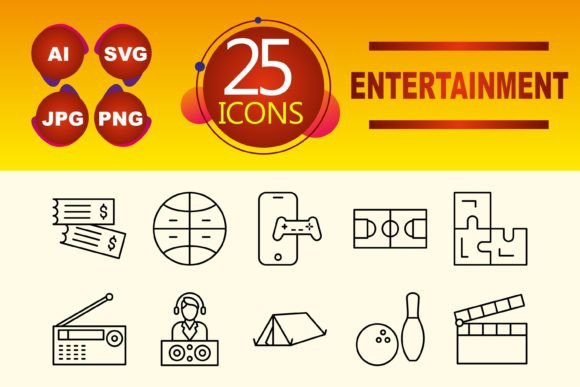
As a brand designer, I often look for graphic design assets that can elevate a small business's visual identity without overwhelming it. Entertainment, a set of icons and graphics, offers a versatile toolkit that can be applied across multiple touchpoints for local businesses, from product labels to social media graphics.
First Impressions: A Mood for Every Brand
Entertainment carries a vibrant and dynamic energy. The icons and graphics suggest a playful yet professional vibe, making them ideal for brands that want to convey fun, creativity, or entertainment-focused messaging. Whether it's a bakery, coffee shop, or handmade soap business, the style feels approachable and modern, fitting well with boutique aesthetics or seasonal campaigns.
The design leans toward a friendly, contemporary feel rather than being overly decorative or rigid. This makes it suitable for businesses aiming to build an emotional connection with their audience while maintaining a polished appearance.
Real-World Applications for Local Businesses
Entertainment is not just a collection of icons—it’s a practical tool for small business branding. From logo design to packaging design, these graphics can add visual interest without overshadowing the core message. For example, a skincare brand might use them in product labels or promotional banners, while a food business could incorporate them into menu graphics or social media visuals.
They also work well in printable design elements like thank-you cards, stickers, or hang tags. When paired with a clean font, they can enhance visual hierarchy and make marketing materials more engaging. A florist could use them in seasonal packaging, while a children’s product brand might find them useful for playful, eye-catching displays.
Supporting Business Presentation
Using Entertainment in a brand’s visual strategy can significantly improve the first impression. It helps create a stronger brand identity by offering consistent design elements across different platforms. This consistency builds customer trust and makes the business appear more professional.
For product packaging, these graphics can increase shelf appeal by adding subtle accents that stand out without being distracting. They also help with product recognition, especially when used alongside a clear logo or brand color scheme.
In digital spaces, such as web design or social media graphics, Entertainment can bring life to banners, infographics, or UI templates. It works well in Canva templates or other creative marketplace resources, offering a quick way to enhance editorial design without compromising on quality.
Where Entertainment Excels
Entertainment shines in areas where visual storytelling is key. Product labels benefit from its clarity and charm, while promotional banners gain a sense of movement and energy. It’s also great for seasonal campaign visuals, helping businesses stay relevant during holidays or special events.
For packaging design, it adds a decorative touch that complements the product without overpowering it. In social media campaign graphics, it can make content more engaging and shareable. Whether it’s a boutique store or a handmade business, Entertainment offers a flexible solution for visual enhancement.
Where to Use with Caution
While Entertainment is versatile, it may not suit every brand. Formal corporate branding, for instance, might prefer a more minimalistic approach. Similarly, very small labels or crowded product packaging could make the graphics too busy or hard to read.
In layouts with a lot of text, such as ingredient-heavy packaging or legal information sections, the design could compete with important details. Low-contrast backgrounds might also reduce visibility, and luxury minimalist brands may find the style too ornate.
Practical Designer Notes
Before finalizing any project, I always test design assets on real packaging mockups. Entertainment should be checked in black and white to ensure it remains effective without color. Previewing it on small labels is essential to confirm legibility and impact.
It’s also important to test the graphics with brand colors, ensuring they complement the overall palette. Comparing them with competitor packaging can highlight how unique the design is. Print quality should be reviewed, and transparency in PNG designs should be confirmed for seamless integration.
If the asset includes SVG design, checking editability is crucial for customizations. Testing it beside different font styles—serif, sans serif, script, or display fonts—can show how it adapts to various brand voices.
Finally, always verify commercial licensing before using the asset for client work, business branding, or physical product sales. Entertainment, as a graphic design asset, should come with clear terms for commercial use to avoid legal issues.
Conclusion: A Valuable Tool for Local Business
Entertainment offers a range of icons and graphics that can support local business branding, product presentation, and promotional visuals. Its versatility makes it a valuable addition to any small business’s design toolkit, whether it’s a handmade seller, a food business, or a boutique store.
By thoughtfully integrating these elements, designers can create more engaging, cohesive, and professional brand identities that resonate with customers and stand out in competitive markets.